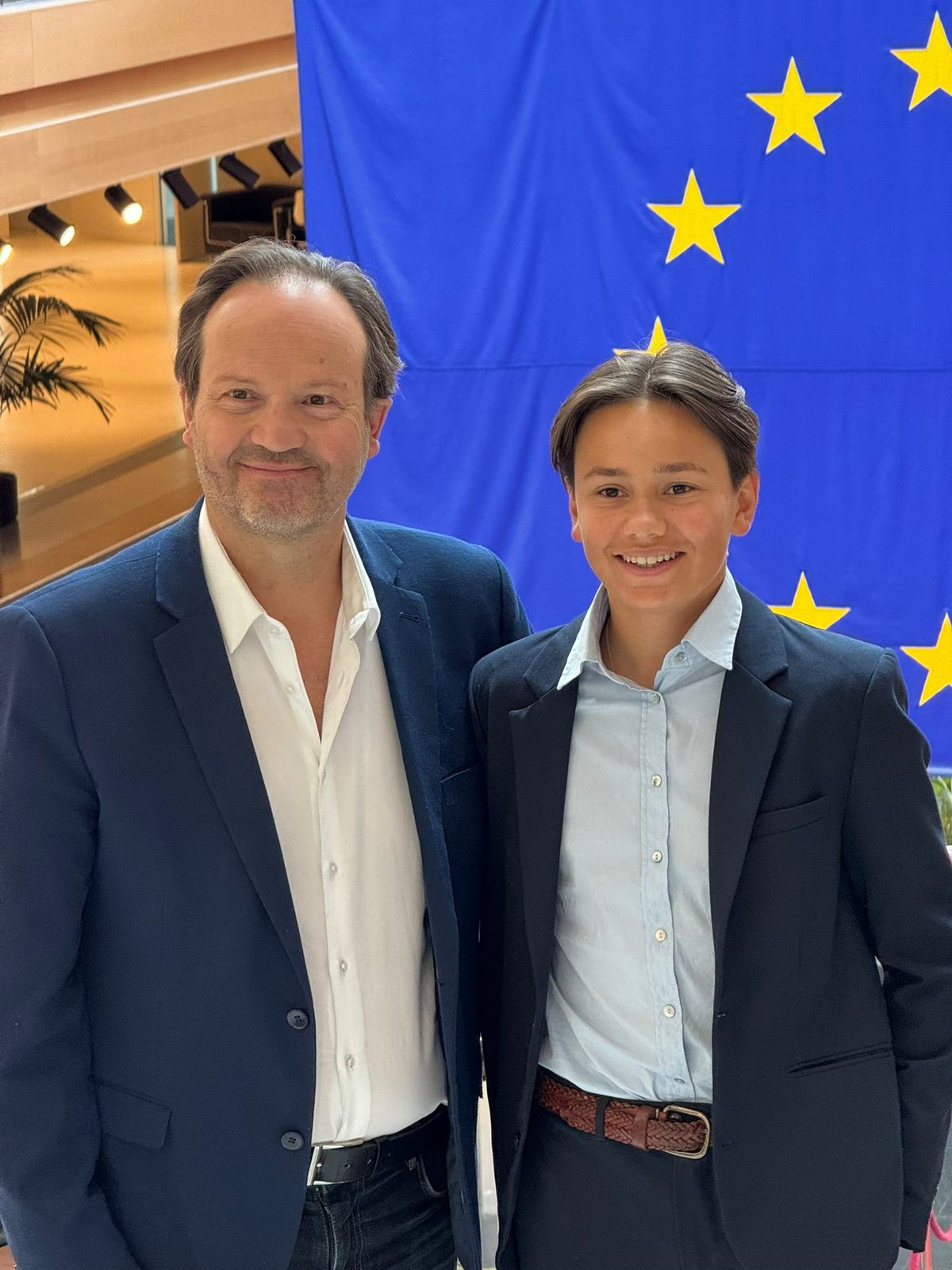
In July 2026, I spent a week interning with MEP Jean-Marc Germain at the European Parliament in Strasbourg. This page is my report from that internship — who I met, what I saw, and what I actually did. The Roll Call and the two "Understand" pages grew directly out of it.
I'm Paul Lefebvre, a Première (11th grade) student at Lycée Notre-Dame de Mongré in France. I'm interested in the sciences, but also in how European politics actually works day to day — not just the headlines. In July 2026, I got the chance to spend a week finding out first-hand, interning with MEP Jean-Marc Germain at the European Parliament in Strasbourg.
This site — the vote tracker, the explainers on the Parliament and the EU — is what came out of that internship. This page is the report itself: the people, the building, and the work.
The MEP whose office hosted me for a week.
Jean-Marc Germain was born in 1966 in Lyon and trained as an engineer at the École Polytechnique before moving into public policy — first at the French Ministry of Economy and Finance in 1992, then as a technical advisor to Martine Aubry at the Ministry of Employment and Solidarity, and later on Prime Minister Lionel Jospin's team at Matignon. He went on to serve as deputy director-general of services for the Lille Métropole urban authority under Martine Aubry.
He was a member of the French National Assembly for Hauts-de-Seine's 12th constituency from 2012 to 2017, where he worked on social and labour law — including as rapporteur for France's "emplois d'avenir" youth-employment scheme and the job-security law — and later joined the Foreign Affairs Committee, focusing on international migration. Within the Socialist Party, he held national roles overseeing employment policy and, later, international relations. In 2021 he was elected to the Île-de-France regional council.
In June 2024, he was elected to the European Parliament on the PS/Place Publique list led by Raphaël Glucksmann. He now sits with the S&D Group and serves on the Committee on International Trade (INTA), the Committee on Budgets (BUDG), and the Committee on Transport and Tourism (TRAN).
A note on independence. I am not affiliated with the S&D Group or with any other political group or political figure. That said, I am genuinely and deeply grateful to the MEP and his team for opening their office to a high school student for a week, patiently answering my questions, and entrusting me with real tasks.
Thank you, Jean-Marc — for the time, the patience, and for treating a week with a Première student as worth taking seriously.
What "shadowing an MEP" actually looked like.
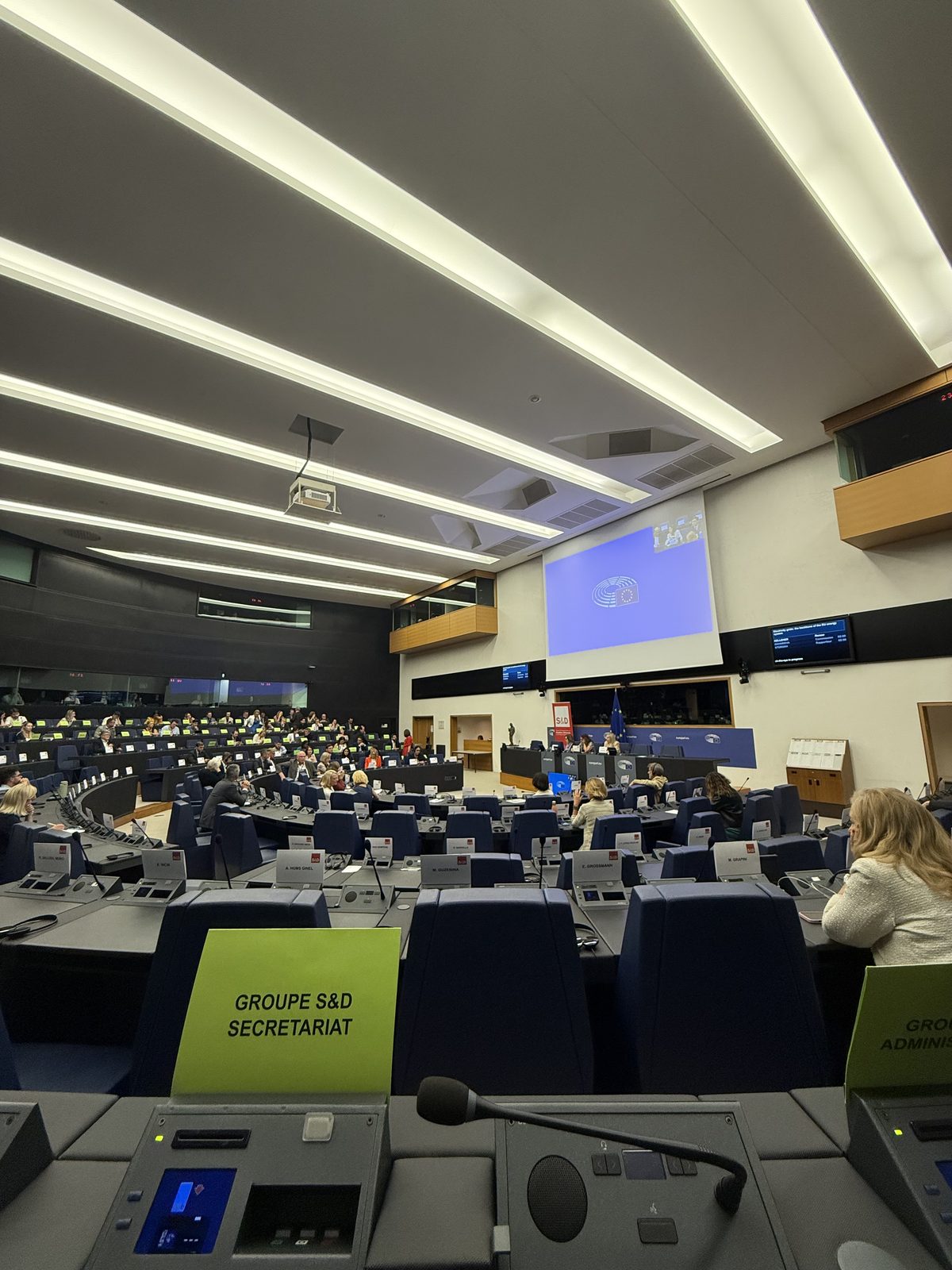
One of the more eye-opening parts of the week was sitting in on an S&D Group meeting — the closed-door session where the group works out its position before a committee vote or a plenary sitting. I won't repeat what was actually discussed in the room, since those meetings are held in confidence, but just being there was instructive in itself: legislation doesn't arrive at a vote pre-decided. It gets argued over, amended, and negotiated by people, in a room, days before anyone outside ever hears about it.
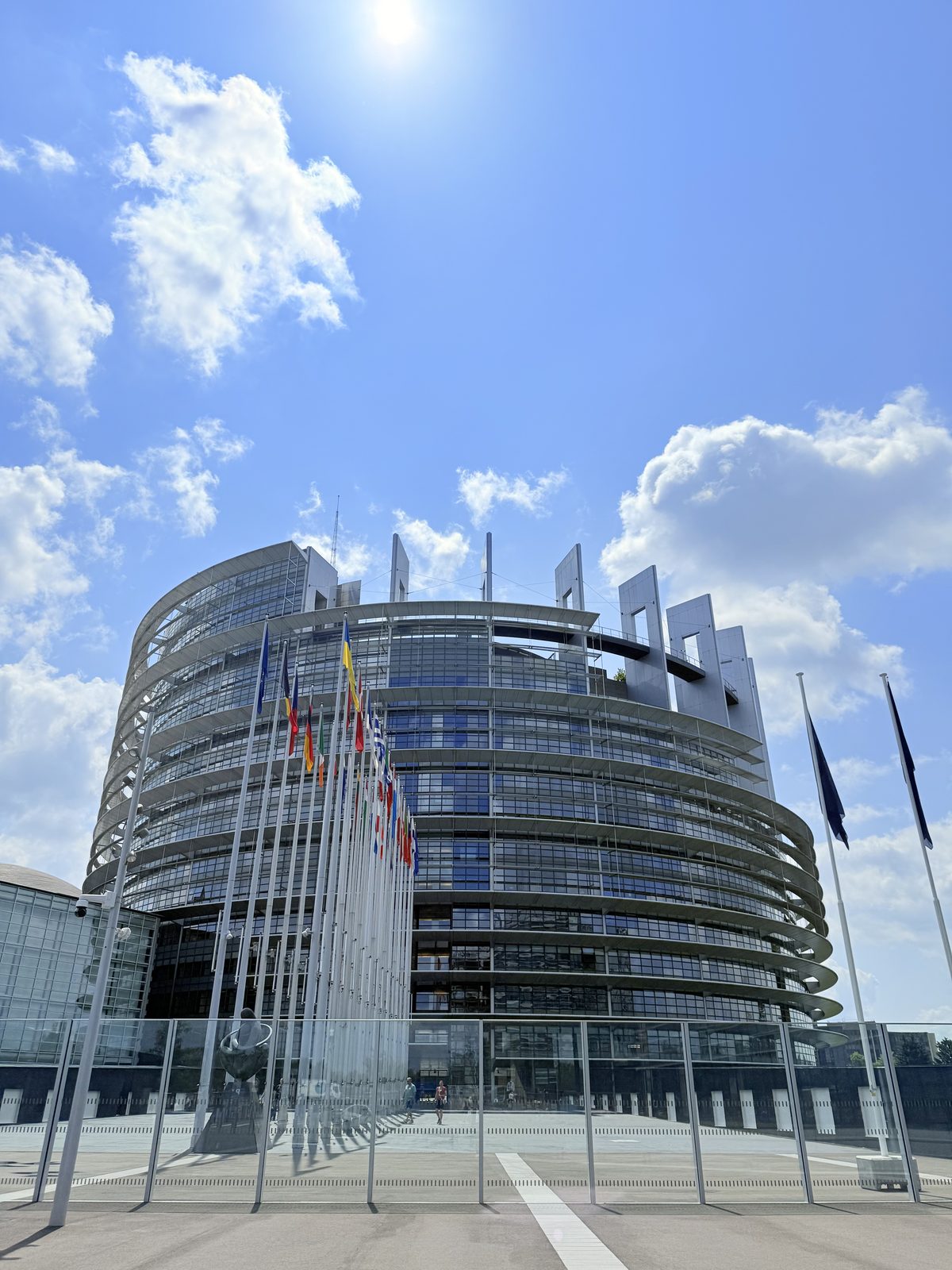
The Louise Weiss building in Strasbourg, home to the Parliament's plenary sessions since 1999 — named after the French journalist and politician who, as the Parliament's oldest sitting member, opened its first directly-elected session in 1979.
The Louise Weiss building from outside — its curved glass tower is one of Strasbourg's landmarks, ringed by the flags of all 27 member states.
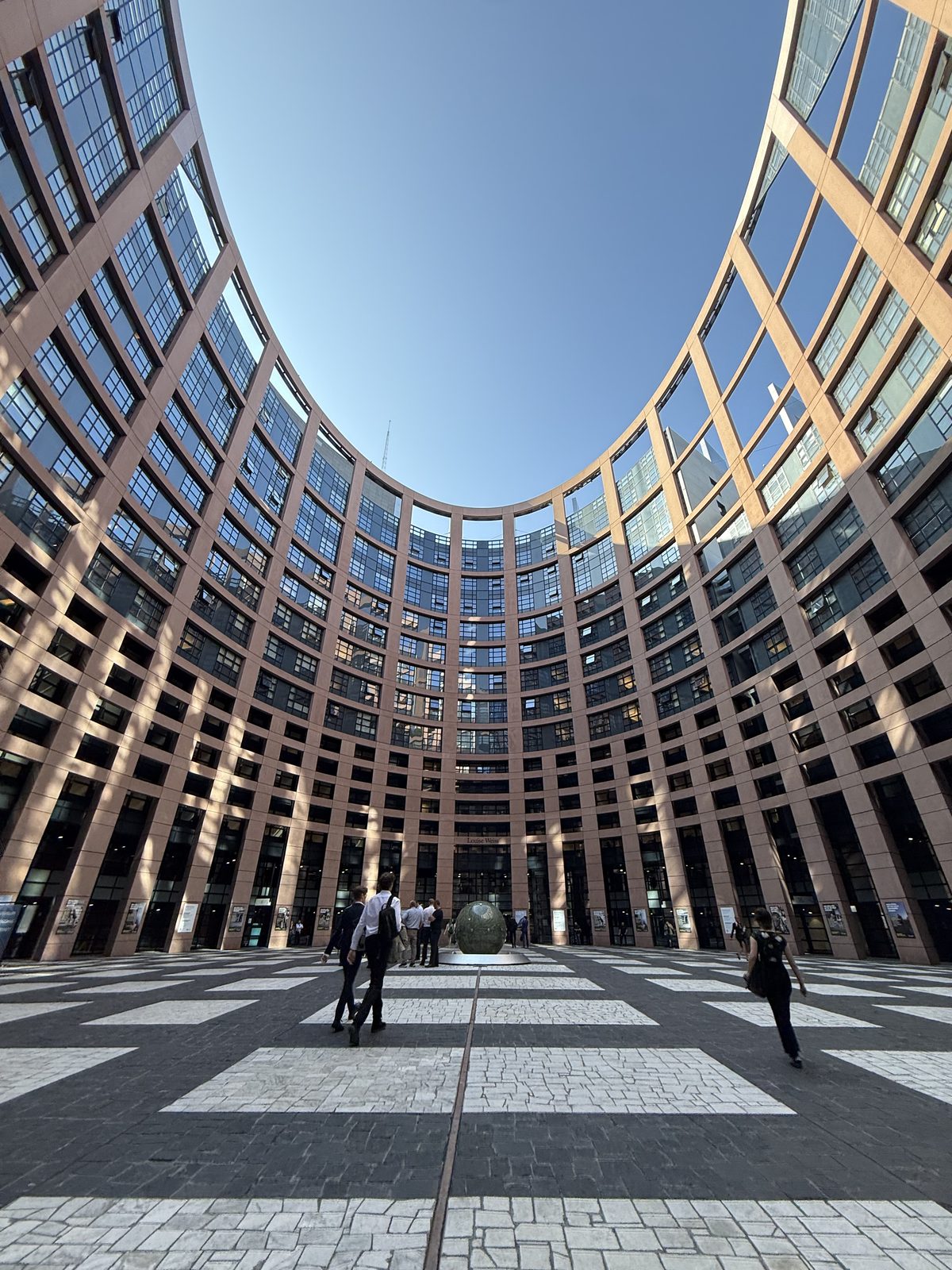
The whole complex is built as a horseshoe around this open central courtyard — looking straight up gives a sense of just how large it is.
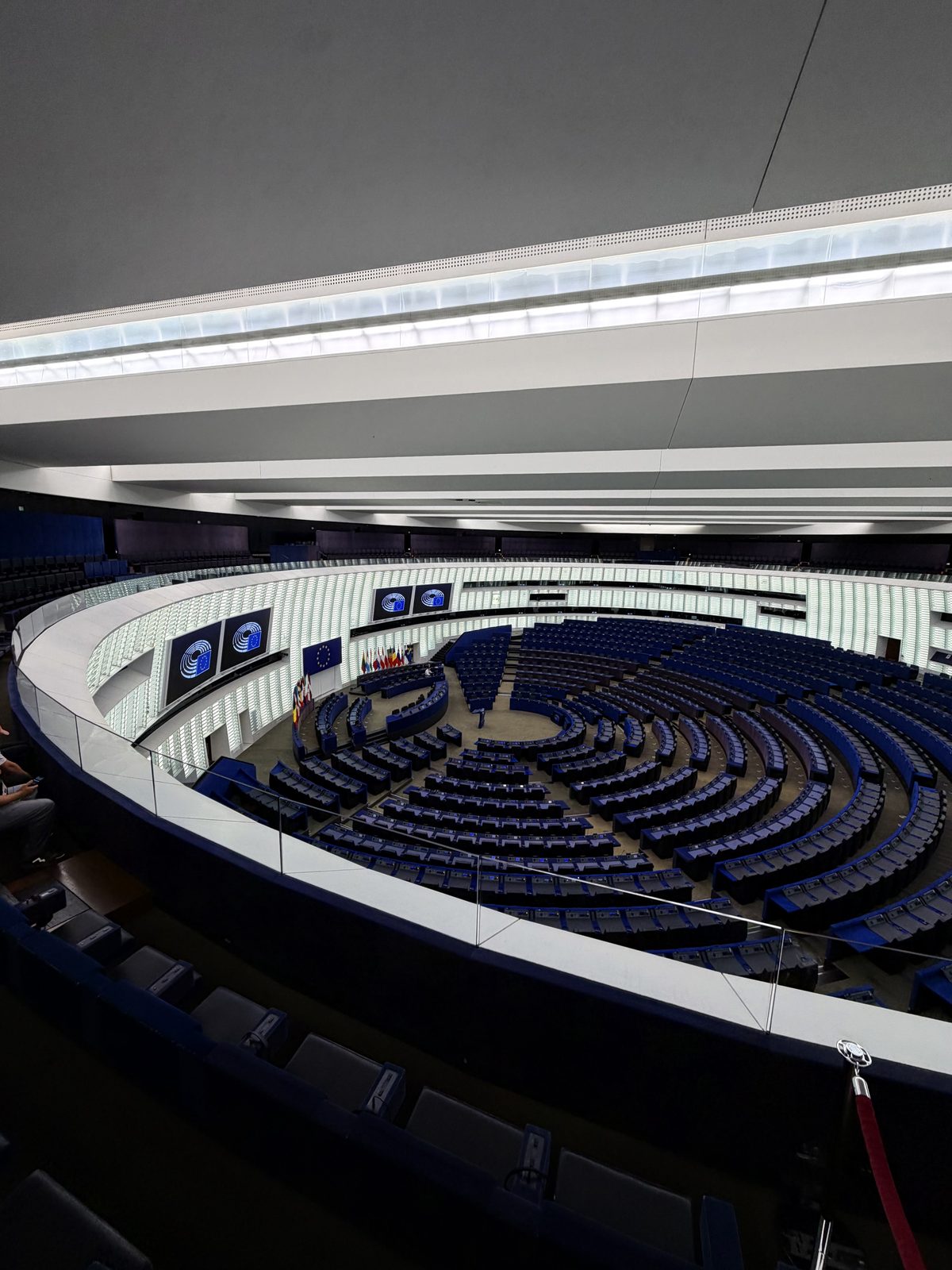
720 seats for 720 MEPs, seen from the visitors' gallery — the same chamber mapped out on the "Understand the Parliament" page, empty between sessions.
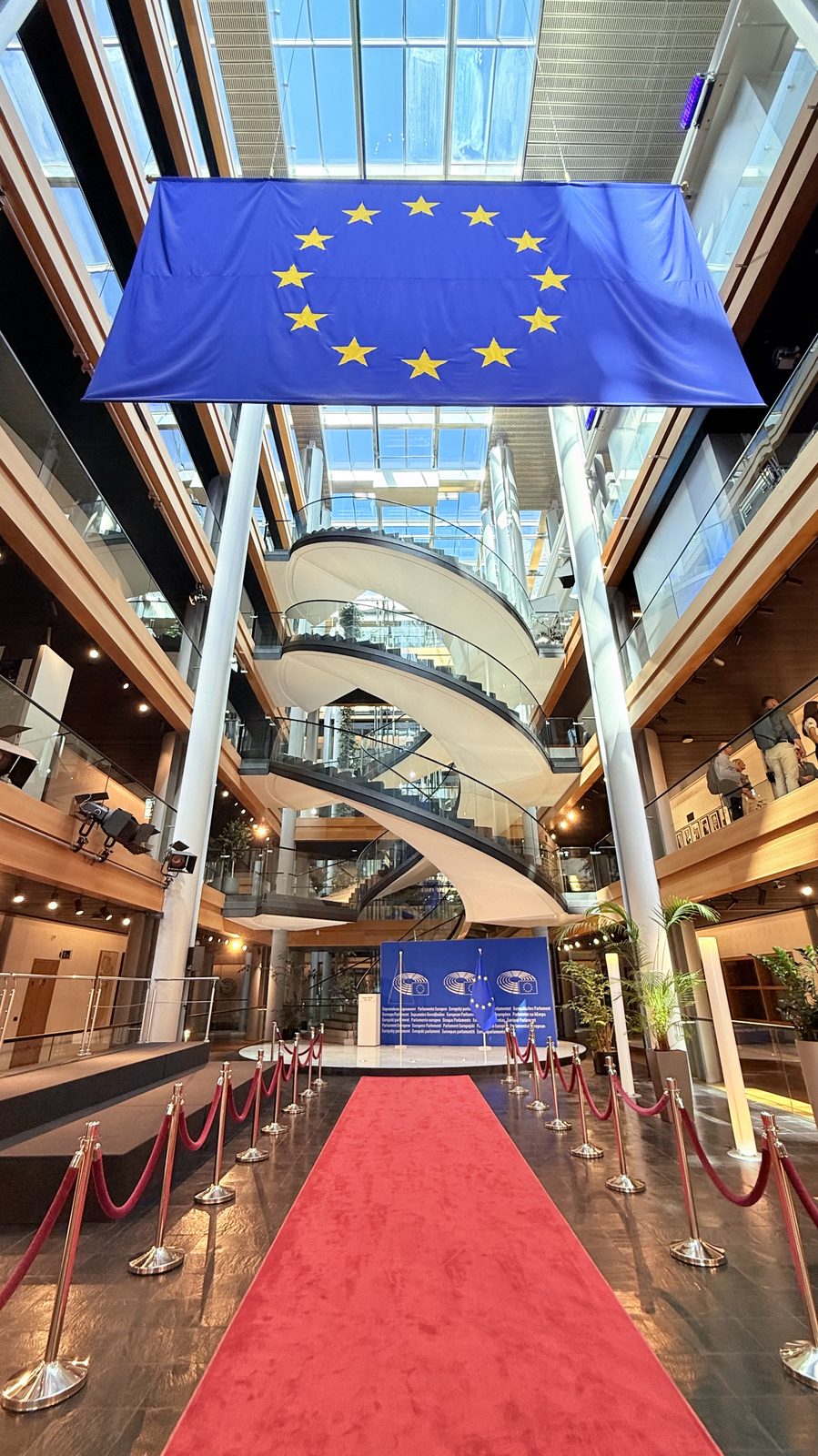
The grand staircase used for official ceremonies and formal welcomes — red carpet, EU flag, and all.
Briefly — without repeating anything said behind closed doors.
Watched part of a plenary sitting from the public gallery — the full 720-member session where Parliament formally votes on texts, several of which are now tracked on the Roll Call.
Sat in on committee-level discussion, where the detailed, line-by-line work on a piece of legislation actually happens before it ever reaches plenary.
Attended S&D Group and French delegation meetings where members and staff coordinate their position ahead of votes.
Spent time with Jean-Marc Germain's team on day-to-day casework and research.
Note-taking wasn't the only contribution I made. Working with Jean-Marc Germain's communications team, I scripted and filmed an on-camera walking tour of the European Parliament — an attempt to explain, in plain language, how the building and the institution actually work. It's now live on his official Instagram and Facebook.
You don't expect Europe to run this deep — but it really is an enormous institution, and it truly matters. Long live Europe!